
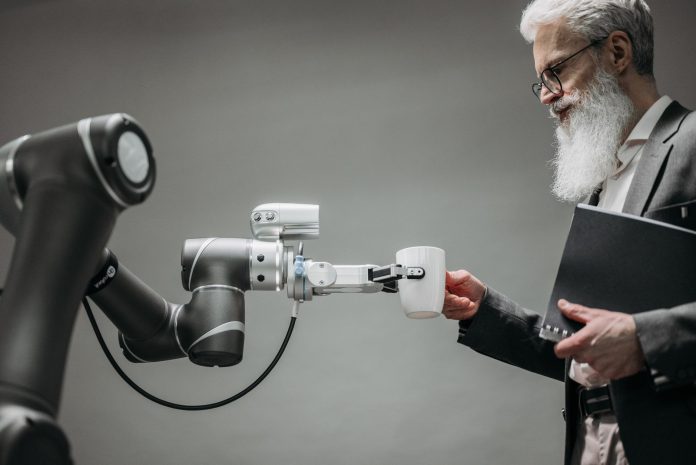
If 2023 was the year of chatbots and 2024 the year of copilots, 2025 is shaping up to be the year of agents. AI agents go beyond responding to prompts — they pursue multi-step goals autonomously, using tools like web search, code execution, file access, and API calls to complete complex tasks with minimal human intervention.
The shift from assistant to agent changes the risk profile fundamentally. An assistant that gives bad advice is correctable; an agent that autonomously sends emails, modifies databases, or executes code based on flawed reasoning can cause real damage before a human notices. Robust agent design therefore requires careful action scoping, confirmation thresholds, and rollback capabilities.
Multi-agent systems — where specialized agents collaborate, critique each other, and hand off subtasks — are beginning to tackle problems that single agents cannot. One agent researches, another writes, a third fact-checks, and a coordinator synthesizes the output. This division of cognitive labor mirrors how expert human teams operate.
Enterprises piloting agentic workflows report significant gains in knowledge work throughput. Legal teams use agents to review contracts; financial analysts use them to synthesize earnings reports; engineers use them to triage bug reports and generate test cases. The key design principle: give agents enough autonomy to be useful, enough constraints to be safe, and enough transparency to be trusted.
What This Means Going Forward
Understanding the forces driving change in any field requires looking beyond the surface-level headlines to the structural shifts unfolding beneath them. The most important trends are rarely the noisiest ones — they are the ones that quietly reshape competitive dynamics, regulatory landscapes, and consumer expectations over multi-year timeframes.
Acting on these insights requires distinguishing between what is knowable, what is uncertain, and what is unknowable. The knowable trends — demographic shifts, infrastructure investments, regulatory trajectories — can be planned for with reasonable confidence. The uncertain ones call for scenario planning and optionality. The unknowable ones call for resilience and adaptability rather than prediction.
- Monitor leading indicators, not just lagging ones — they provide earlier signals for course correction.
- Build relationships with domain experts who can provide on-the-ground intelligence beyond public data.
- Test assumptions regularly — the most dangerous belief is one that has never been questioned.
- Maintain strategic flexibility; lock in commitments only when uncertainty resolves.
Key takeaway: The organizations and individuals who navigate change most successfully share a common orientation: they are curious rather than certain, adaptive rather than rigid, and focused on long-term positioning rather than short-term optimization. In a fast-moving environment, that orientation is the most durable competitive advantage of all.
The Human Side of the AI Transition
The organizations and individuals who thrive in an AI-integrated world will not be those who fought the transition or those who surrendered to it — they will be those who engaged with it deliberately, learned continuously, and designed thoughtful integrations between human and artificial intelligence.
Every significant technological shift has required workers to adapt — and AI is no exception. The displacement anxiety around AI is real and, for specific roles, justified. But the historical pattern of technological change is consistent: the aggregate number of jobs expands as productivity increases create new demand, even as specific task profiles shift dramatically. The transition requires active policy support, training investment, and institutional adaptation.
- AI augments high-judgment roles more effectively than it replaces them — redesign around this truth.
- Workers who understand AI outputs critically will outperform both those who ignore and those who over-trust AI.
- Retraining investments pay back faster when targeted at adjacent skills rather than entirely new disciplines.
- Transparency about AI’s role in decisions builds trust with both employees and customers.
- Human-AI team design — defining clearly what each does — outperforms either working in isolation.
The roles most vulnerable to AI automation share a pattern: they involve high-volume processing of structured information against defined rules. Document processing, data entry, routine customer service triage, and basic coding tasks all fall in this category. The roles most resilient to AI automation involve judgment, novel problem-solving, emotional intelligence, and physical dexterity — characteristics where human performance remains substantially superior.